Every marine project sits inside a living ecosystem—and regulators expect proof that work stays within permitted limits. Environmental partners help owners, EPCs, and dredging contractors predict, measure, and minimize impacts at each stage: baseline surveys, construction monitoring, and post-work verification.
Baseline & planning. Providers establish environmental baselines (water quality, benthic communities, seagrass/reef coverage) and translate permit conditions into practical site controls. They advise on seasonal windows, protected species sensitivities, current/tide effects, and monitoring locations so your method statements are realistic and defensible.
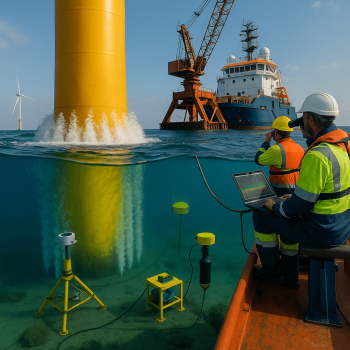
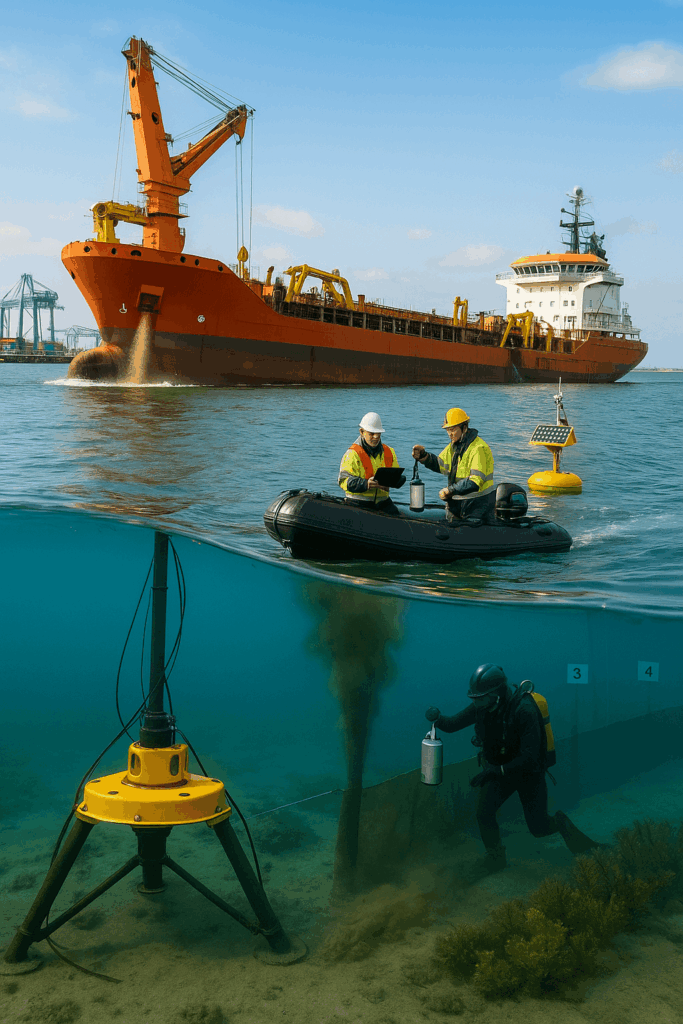
Construction & compliance. During works—pile driving, quay builds, cable landfalls, outfalls, or dredging—teams deploy turbidity sensors, current meters (ADCP), and hydrophones to track TSS, DO, pH, temperature, hydrocarbons, and underwater noise. For wildlife, MMO/PSO observers and passive acoustic monitoring (PAM) set exclusion zones, trigger soft starts, and record sightings/actions. Where limits are approached, crews implement silt curtains, bubble curtains, cofferdams, and timing controls to pull metrics back into compliance without stopping the job.
Sampling & QA/QC. Specialists collect water and sediment samples with proper chain-of-custody and accredited lab analysis (metals, nutrients, organics, microplastics when scoped). They document methods, calibration logs, and GPS positions so data stands up to regulator or client audit.
Mitigation & restoration. When habitat is disturbed, teams design and deliver seagrass/coral transplants, oyster/reef modules, mangrove planting, and shoreline stabilization—paired with monitoring that proves performance over time.
Reporting & transparency. You receive live dashboards or daily summaries, annotated GIS maps, threshold alerts, and a clear close-out report with photos, plots, and raw data. That evidence speeds approvals, reduces re-work, and protects reputation.
With Nautrex, you can compare vetted environmental providers by certifications, equipment spread, and regional experience—then select a team that fits your permit, schedule, and budget while keeping impacts measurably low.