Introduction
By 2050, the world’s population will pass 9 billion. Feeding this growing humanity is one of the biggest challenges of our time. While agriculture has expanded to its limits, the ocean — covering more than 70% of the planet — is becoming the frontier of food security.
Enter aquaculture: the fastest-growing food production sector on Earth. From salmon pens in Norway to shrimp farms in Asia, aquaculture now provides over half of the seafood humans consume. Yet, farming the ocean is not as simple as planting fields. The sea is alive, powerful, and unpredictable. Storms batter cages, predators test defenses, and microscopic changes in water quality can cause mass mortality overnight.
This is why specialized aquaculture and fisheries support has emerged as a critical industry of its own. From divers and ROVs inspecting nets to environmental scientists monitoring oxygen levels, these services ensure that farms remain safe, compliant, and productive.
👉 Explore Nautrex’s Aquaculture & Fisheries Support services to see how experts keep marine farms thriving.
Why Aquaculture Needs Specialized Support
Fragility of Farming in the Open Sea
Unlike land farming, aquaculture is exposed to the raw forces of nature. Nets foul with algae, moorings loosen with tides, and pens deform under storms. Left unchecked, these issues lead to fish escapes, equipment loss, and massive economic damage.
Compliance, Biosecurity, and Environmental Risks
Governments around the world are tightening regulations. Farmers must monitor not only their stock but also their environmental footprint — tracking waste, preventing predator entanglements, and ensuring fish health. Without proper support, farms risk fines, shutdowns, and reputation damage.
Core Services That Keep Farms Safe and Productive
Net Inspections & Maintenance
Nets are the first line of defense. Holes, fouling, or wear can lead to escapes worth millions. Certified teams conduct inspections, cleaning, and repairs — often using divers or ROVs — while documenting every step for compliance.
Moorings and Pen Infrastructure
Anchors, chains, and bridles hold massive pens in place. A single failure can cause an entire farm to drift or collapse. Routine mooring checks confirm tensions and integrity, ensuring stability during storms and tidal surges.
Water Quality & Environmental Monitoring
Fish live or die by the chemistry of their environment. Sensors track dissolved oxygen (DO), salinity, pH, turbidity, and nutrient levels. Increasingly, farms use AI systems to predict harmful algal blooms (HABs) or oxygen crashes before they occur.
Predator Exclusion & Biosecurity
Seals, sea lions, and birds constantly test farm defenses. At the same time, parasites like sea lice or viral outbreaks can devastate entire stocks. Support teams apply predator deterrents, install exclusion nets, and enforce strict biosecurity protocols to prevent spread of disease.
Harvest & Transfer Welfare Support
Crowding, pumping, and grading fish for harvest or transfer requires careful handling. Poor practices can lead to stress, injuries, and high mortality. Welfare-focused teams manage oxygenation, aeration, and humane transfer systems.
Technology Transforming Aquaculture in 2025
ROVs and Drones for Inspection
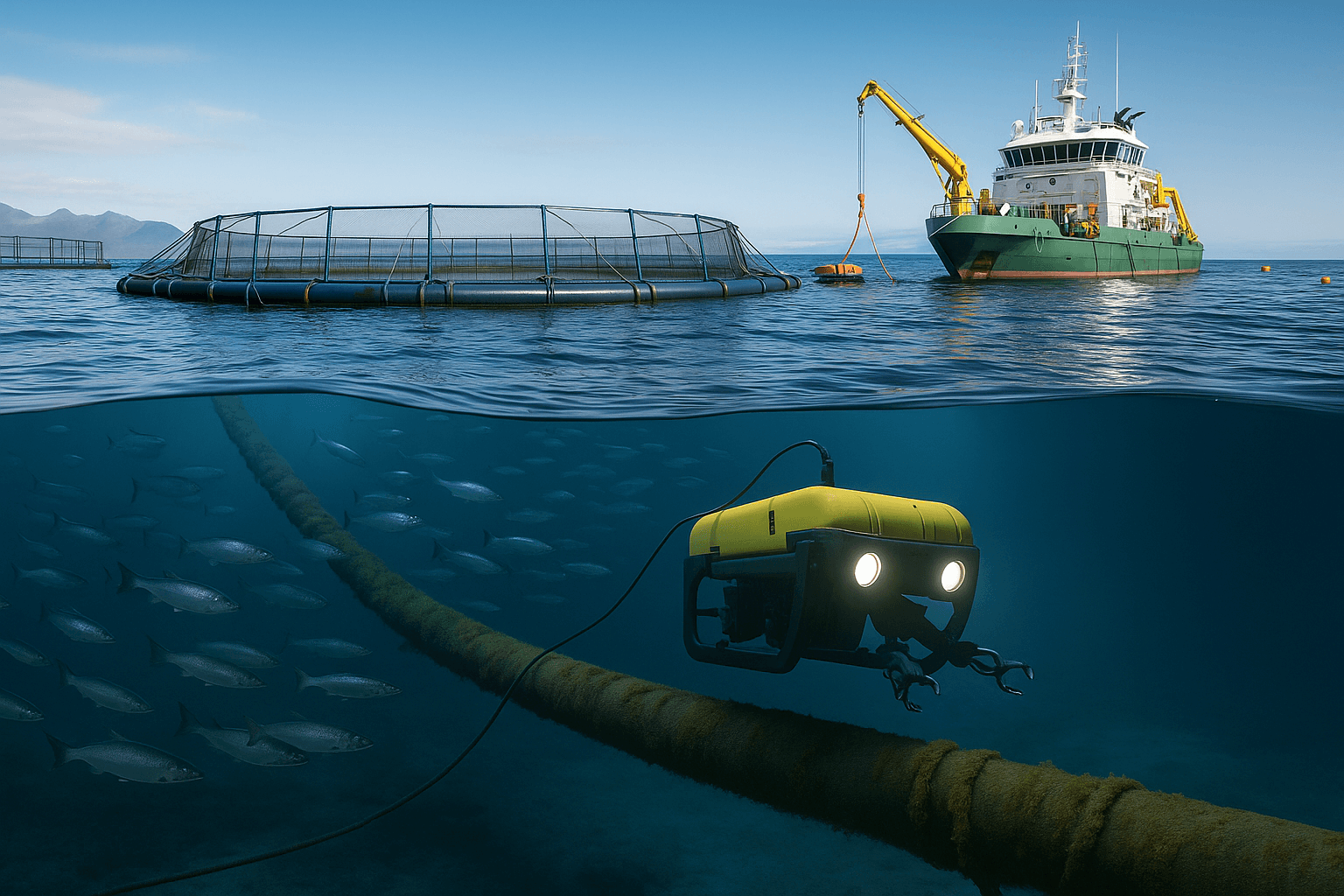
Where divers once risked dangerous underwater inspections, ROVs (Remotely Operated Vehicles) now glide along nets and moorings, capturing HD video and performing minor repairs. Aerial drones also inspect floating pens and site infrastructure from above.
AI and IoT for Water Quality
Farms are increasingly wired with IoT sensors streaming live environmental data. AI platforms process this information to flag anomalies, send alerts, and even recommend actions — from adjusting aerators to reducing feeding rates.
Automated Feeding and Welfare Monitoring
Feeding is the largest cost in aquaculture. Smart feeders now use underwater cameras and AI to monitor fish behavior, delivering food only when needed. This reduces waste, improves growth rates, and protects water quality.
The Risks of Neglecting Support Services
Fish Escapes and Economic Loss
A torn net can release thousands of salmon into the wild. Not only does this represent millions in lost stock, but it also risks genetic pollution of wild populations, leading to regulatory penalties.
Disease and Welfare Failures
Unchecked biosecurity lapses can cause mass mortality events — entire harvest cycles lost. Disease outbreaks often spread farm-to-farm, magnifying impact and damaging public trust in aquaculture.
Regulatory Penalties and Reputation Damage
Modern consumers demand sustainable seafood. Farms that fail to demonstrate compliance with welfare, biosecurity, and environmental standards risk losing certifications — and access to lucrative global markets.
The Future of Aquaculture Support
Smart Farms with Digital Twins
The next decade will see farms create digital twins of their operations. Real-time models will integrate sensor data, allowing managers to predict risks and optimize performance virtually.
Offshore Mega-Farms
Nearshore waters are increasingly crowded, driving aquaculture further offshore. These mega-farms require robust moorings, industrial-scale nets, and 24/7 monitoring support.
Integrated Multi-Trophic Aquaculture (IMTA)
Future farms won’t just raise fish. They’ll integrate seaweed and shellfish to absorb nutrients and reduce environmental impact, creating truly circular and sustainable ecosystems.
How Nautrex Strengthens Aquaculture Operations
At Nautrex, we recognize that aquaculture is both fragile and vital. Through our Aquaculture & Fisheries Support category, we connect operators with:
- Certified divers and ROV inspection teams.
- Mooring and infrastructure specialists.
- Environmental monitoring scientists.
- Welfare-focused harvest and transfer crews.
- Predator control and emergency response experts.
Whether you run a coastal salmon farm in Norway or an inland tilapia operation in Canada, Nautrex ensures you access the expertise to stay safe, compliant, and productive.
Conclusion
Aquaculture is no longer a niche. It is the backbone of global seafood supply, the blue economy’s cornerstone, and a key answer to feeding billions sustainably. But fish farming cannot succeed without robust support — the divers, ROVs, scientists, and welfare specialists who protect both stock and environment.
The future of aquaculture will be bigger, smarter, and further offshore. With digital twins, AI monitoring, and integrated ecosystems, tomorrow’s farms will look more like floating space stations than traditional cages.
And behind it all will remain the specialists ensuring nets are strong, oxygen is stable, predators are excluded, and fish are cared for. Because only when aquaculture is safe and sustainable can it fulfill its promise of feeding the world.
👉 Learn more about expert aquaculture support at Nautrex.